Methods & Materials
The Story of the Micron Codex
Instrument & Ink
- Nib
- German Brause No. 65
- Ink
- Tom Norton's archival walnut ink
- Holder
- French pewter, Bourg-de-Péage
- Stroke width
- 50 μm
Writing at 50 microns cannot simply be done with everyday pens. Only a dip pen could provide the necessary control and level of exactness. Early attempts weren't perfect and settling on materials alone consumed the better part of four months.
The Writing Surface
- Paper
- Japanese cotton, 80gsm
- Maker
- MD Paper
- Format
- A5, graph ruled
Paper selection was equally important. Standard writing papers, even more premium options, have a textured tooth that can distort such fine writing. The paper had to be delicate and smooth, while also able to stand the test of time by being archival and acid-free. The final choice was an immensely delicate A5 Japanese cotton 80gsm paper made by MD Paper with graph ruling to help maintain uniform writing.
The Act of Writing
Approached as an ascetic discipline, the physical act of writing this manuscript took shape in short bursts of productivity which were often interrupted by long stretches where daily responsibilities took priority. It was an exercise in attention to write at such a scale as the nib required a constant balance of ink, cleaning of dried buildup, and focus on each individual word. After three years of this laborious writing, all 82,590 words were transcribed without a single error. This uniquely makes The Micron Codex the lengthiest microcalligraphic text in the history of human writing.
The Binding
- Bound by
- Maria Ruzaikina, Pimlico Bookbinding, London 2026
- Structure
- Concertina
- Leather
- Nigerian Oasis goatskin
- Enclosure
- Matching clamshell box
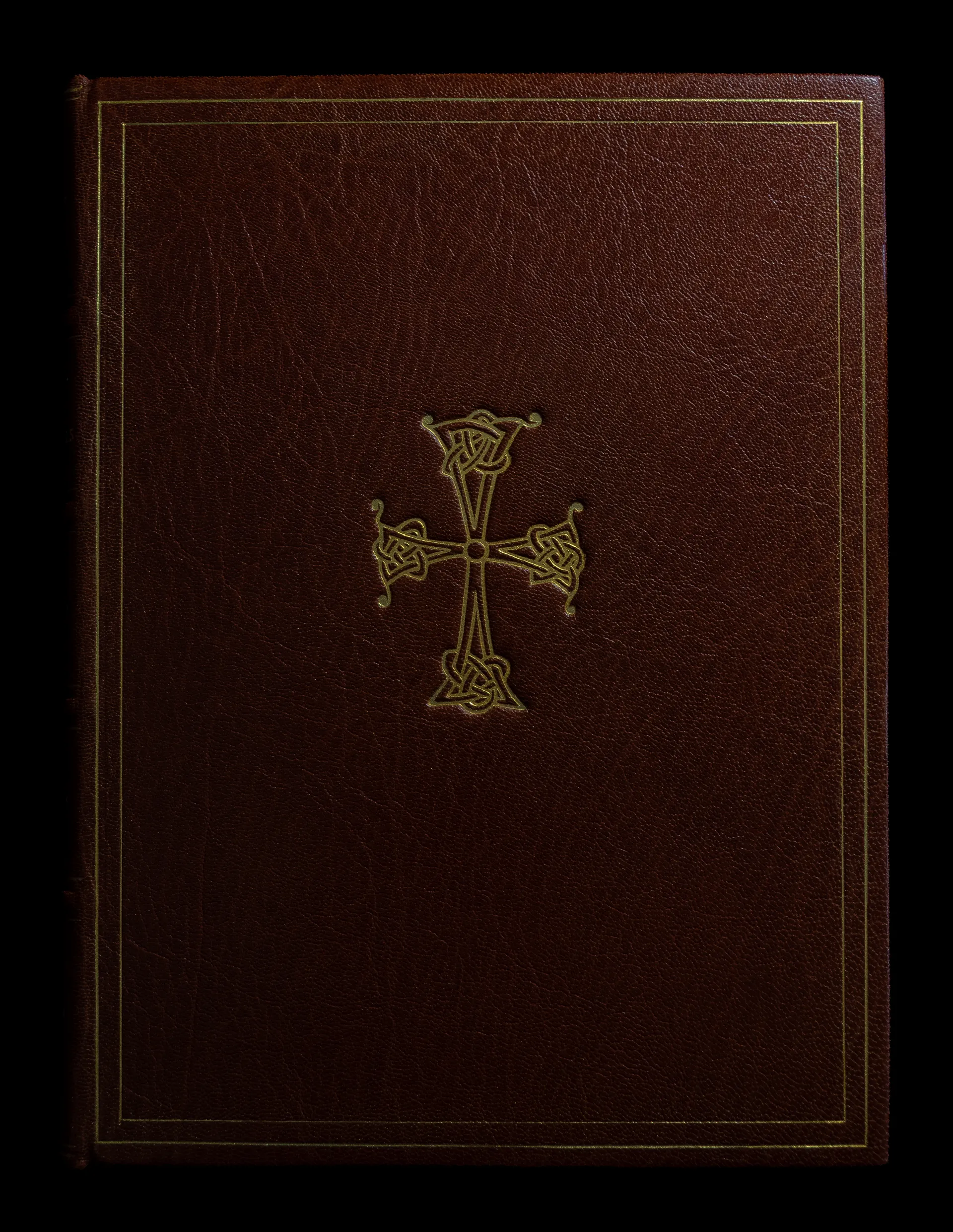
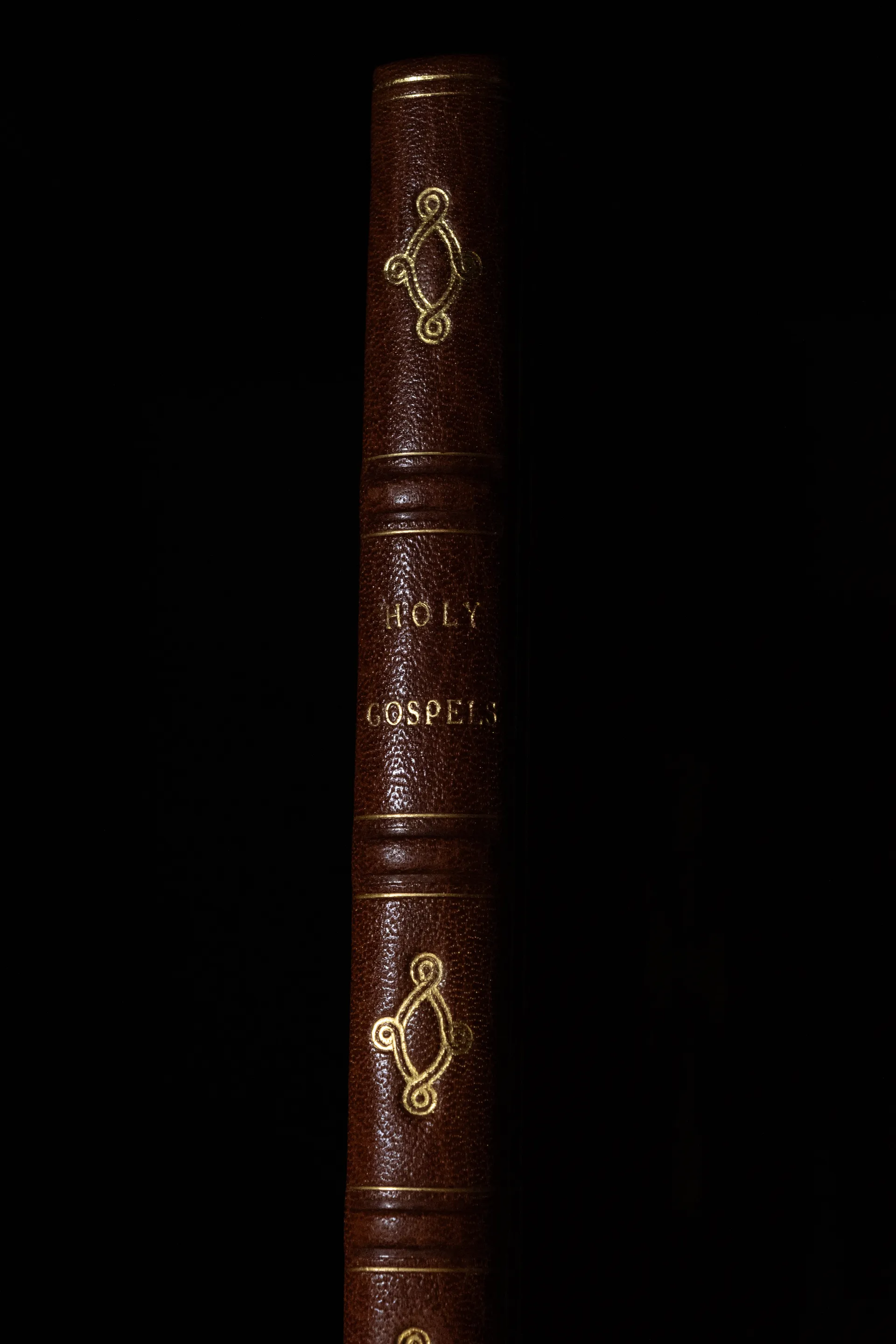
The manuscript was bound in the summer of 2026 by Maria Ruzaikina of Pimlico Bookbinding in London. It was re-stitched using a concertina structure to preserve the stability of the pages. The leather used is Nigerian Oasis Goatskin with monogrammed leather doublures, Flavio Aquilina marbled endpapers, Gütermann silk endbands, and 23kt gold tooling. The cover depicts a Georgian cross, adapted from Vladimir Stasov’s Slavic and Oriental Ornament (1887). The intention is a book that will survive centuries and reveal its true nature only to the reader who looks close enough.

2024–2026 A.D.
Matthew: 23,343 · Mark: 14,949
Luke: 25,640 · John: 18,658
King James Version
(Pure Cambridge Edition)
